New moon

Sep 11

Harvest Moon

Sep 26

Dark-sky window

Sep 7 - Sep 15

excellent moon conditions

Best first target

M27/M57 carryover

Ready · City-friendly

Monthly anchors

CygnusAquilaSummer Triangle fading

September 2026

Mon
Tue
Wed
Thu
Fri
Sat
Sun
1
2
3
4
5
6
7
8
9
10
11
12
13
14
15
16
17
18
19
20
21
22
23
24
25
26
27
28
29
30

Meteor Showers

Aurigids
Peak: Sep 1
Southern Taurids
Peak: Sep 10

Targets

Ordered for this month's Munich guide view.

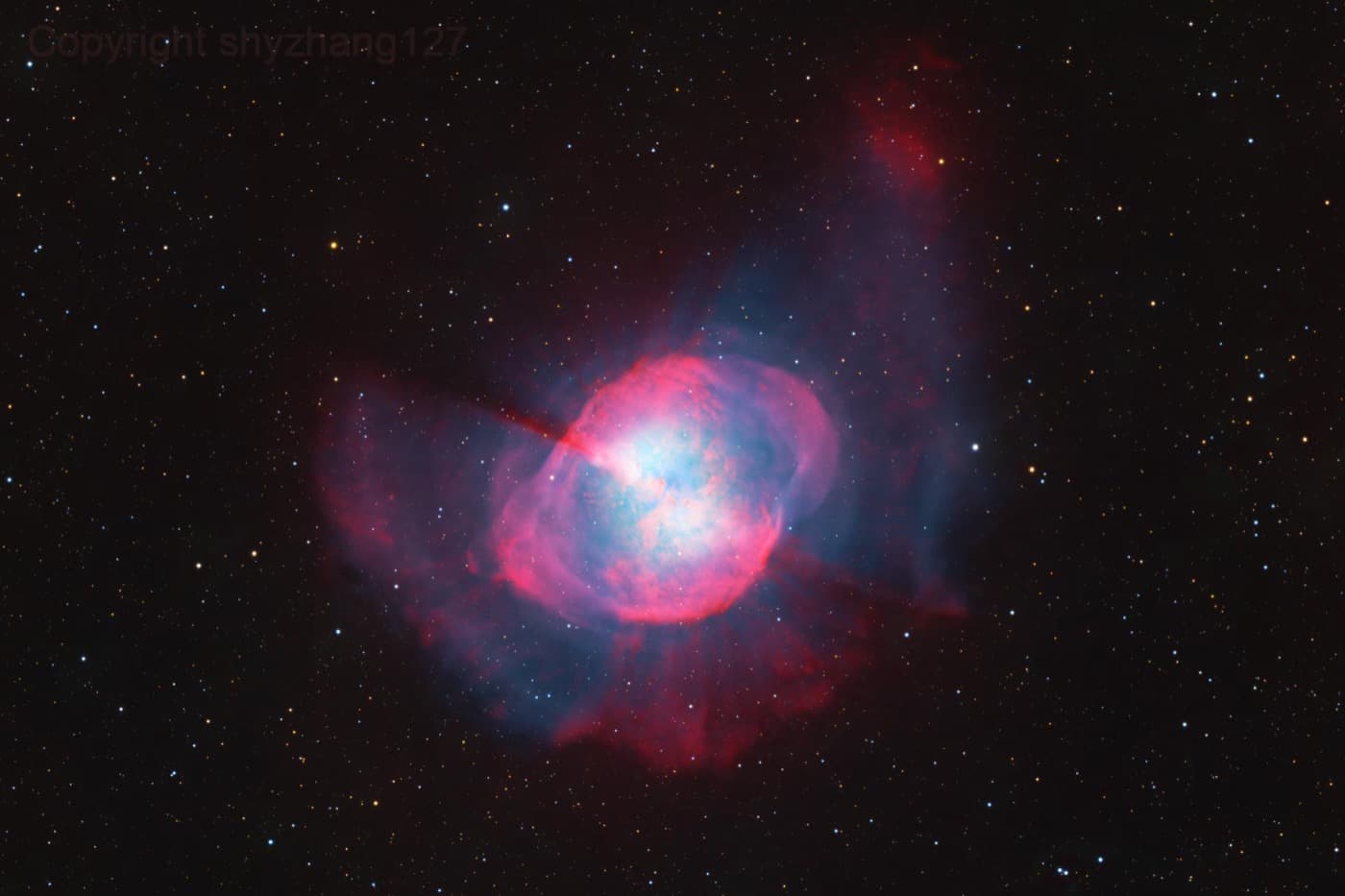
Dumbbell Nebula M27
Image source: Wikimedia Commons

Dumbbell Nebula

M27

Planetary Nebula

easy
ReadyCity-friendlyVulpeculaBinocularsMag 7.51,360 ly

The first planetary nebula ever discovered — a stellar death shroud 1,360 light-years away, expanding into space for the last 10,000 years.

Find it

Not visible to naked eye. Located in the small constellation Vulpecula, about 3° north of the bright star γ Sagittae (the middle star of Sagitta, the Arrow).

Emission Nebula
NGC7000
Cygnus

North America Nebula

NGC7000

Emission Nebula

moderate
FutureCity-friendlyCygnusBinocularsMag 42,600 ly

A massive star-forming region whose dark dust lanes create the striking shape of the North American continent.

Find it

May be glimpsed as a brighter patch in the Milky Way under excellent dark skies. Located about 3° east of Deneb, directly 'behind' it in the Milky Way stream.

Supernova Remnant
VeilNebula
Cygnus

Veil Nebula

VeilNebula

Supernova Remnant

challenging
FutureHorizon checkCygnusSmall telescopeMag 72,400 ly

The expanding shock wave from a supernova that exploded 10,000-20,000 years ago — a stellar explosion still rippling through space.

Find it

Not visible to naked eye. The eastern arc (NGC 6992/6995) passes near the star 52 Cygni. The western arc (NGC 6960, the 'Witch's Broom') passes through the naked-eye star 52 Cygni.

Seasonal constellations

Cygnus

2 targets

September
North America NebulaVeil Nebula

In Cygnus, east of Deneb

Vulpecula

1 target

August
Dumbbell Nebula

In Vulpecula, north of Sagitta the Arrow

Meteor showers

Aurigids

Peak: September 1

6

meteors/hr

A minor shower that occasionally produces surprising outbursts. The 2007 outburst reached ZHR of 130. Fast meteors from a radiant near the bright star Capella. Worth monitoring in early September.

Best viewing

After midnight until dawn

Auriga rises after midnight; best rates pre-dawn

Photo notes

Fast meteors create bright short trails. Be prepared for potential outburst activity.

Southern Taurids

Peak: October 10-11

5

meteors/hr

Part of the Taurid Complex, a broad stream of debris from Comet Encke. While rates are low, the Southern Taurids are famous for producing bright fireballs and bolides. The extended activity period means Taurid fireballs can appear throughout October and November.

Best viewing

After midnight

Taurus rises in late evening; best after midnight

Photo notes

Long activity period allows many photography opportunities. Watch for bright fireballs.